Sales growth and margin growth are often treated as competing priorities. Many businesses chase revenue, believing scale will solve everything. Others focus on protecting margins, sometimes at the expense of momentum.
In reality, neither matters in isolation - what matters is how they work together.
Why Sales Growth Matters
Sales growth signals demand. It shows that customers want what you're selling and that the business has relevance in its market. Without growth, businesses stagnate, fixed costs weigh heavier over time, and long-term viability comes into question.
For early-stage or expanding companies, revenue growth is often essential to reach scale and unlock operating leverage. Growth creates opportunity – but only if it is supported by the right cost structure and pricing discipline.
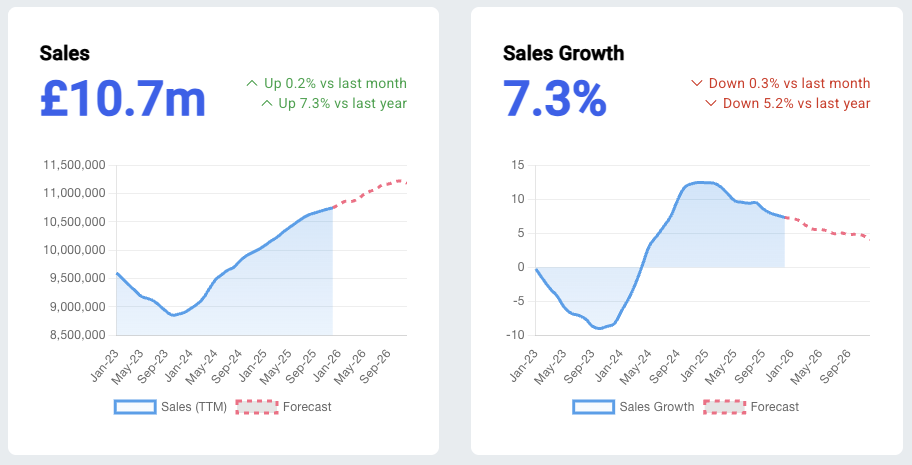
Sales continue to rise, but slowing sales growth signals momentum is easing and future performance may be under pressure.
Why Margin Growth Matters
Margin growth determines quality. Strong margins indicate pricing power, cost control and a sustainable operating model. Revenue that comes at the expense of margin often creates fragile success.
Discounting to drive sales, absorbing cost increases, or adding complexity without efficiency can increase turnover while weakening profitability and cash generation. Over time, this erodes resilience and limits a business's ability to invest with confidence.
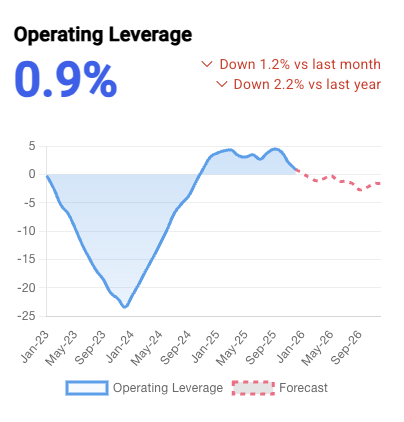
Operating leverage shows gross margin growth is barely outpacing operating cost growth, limiting the profitability benefits of sales growth.
The Danger of Focusing on One in Isolation
The Revenue Trap
High sales growth with falling margins typically consumes cash, as working capital, staffing and overheads rise ahead of returns. From the outside the business looks busy and successful; internally it often feels stretched and risky.
Equally, margin growth without sales growth has limits. A business can optimise costs and improve pricing, but without revenue momentum there is little room to reinvest, innovate or attract talent. Over-focusing on margins can lead to underinvestment and missed opportunities.
The Right Question to Ask
The real question isn't which is more important, but whether growth is profitable and sustainable. Healthy businesses monitor sales growth and margin trends together, using consistent monthly reporting, trend analysis and cash-aware metrics to understand the true impact of decisions.
This means asking whether additional sales improve overall returns, whether margin improvements are structural or temporary, and how both affect cash flow, risk and financial stability.
Building Balanced, Sustainable Growth
A balanced view transforms decision-making. It informs pricing strategy, cost management and investment choices.
- Sales growth creates opportunity
- Margin growth creates stability
- Both together create sustainable success
Businesses that understand the relationship between the two build success that lasts, rather than growth that simply looks good on paper.
Monitor Both Sales and Margin Growth
Actuly tracks revenue growth alongside profitability trends, showing whether your growth is profitable and sustainable.
Get Early Access