For many SMEs, Xero sits at the heart of their finance function. Its standard reports - Profit & Loss, Balance Sheet and Cash Flow - are accurate, reliable and essential for compliance. But when it comes to actually running a business, relying on those reports alone often falls short.
The Problem Isn't the Data - It's the Missing Context
The issue isn't the quality of the data. It's what's missing around it.
Xero's reports are primarily historical. They tell you what happened last month or last quarter, but not why it happened, whether the outcome is good or bad, or what it means for the months ahead. A falling profit figure might be driven by pricing pressure, rising costs, inefficiency, or a one-off event - but the report doesn't explain which. Without context, figures are open to interpretation and decisions become reactive rather than informed.
Key Insight: Historical data without context leads to reactive decisions rather than informed strategy.
Generic Reports Often Need Customisation to Be Useful
Standard reports are also generic by design. They're built to work for every business, which is useful for consistency and compliance, but less helpful for management.
Most SMEs need reporting that reflects how their business actually operates - how performance is driven, where risks tend to emerge, and what decisions matter most. That often means different groupings, clearer layouts, additional metrics, or a sharper focus on the numbers that truly drive outcomes. Without this level of tailoring, reports can feel detached from day-to-day reality and struggle to support confident decision-making.
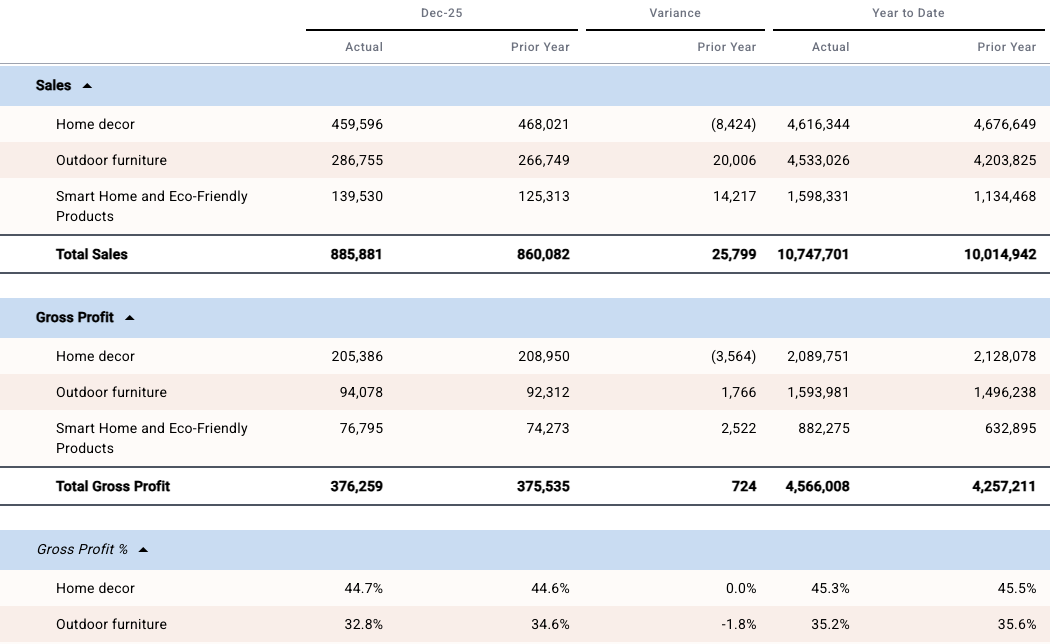
Breaking sales and margins down by business unit reveals where performance is really being created - insight generic reports often hide.
The Questions SME Leaders Actually Need Answered
Crucially, standard accounting reports don't answer the questions SME leaders care about most:
- Are we performing in line with expectations?
- Where are the early warning signs?
- What should we prioritise next?
These are management questions, not compliance ones.
The Gap: Standard reports answer "what happened?" but not "is this good?" or "what should we do next?"
From Historical Reporting to Decision-Ready Insight
Effective decision-making needs more than backward-looking numbers. It requires structured management reporting, clear performance scorecards, trend analysis and forward-looking forecasts. It needs results put into context, risks flagged early, and scenarios explored before decisions are made.
That's why many SMEs and their advisers build layers of insight, ratios and forecasts on top of Xero's core data. When accounting information is transformed into clear, decision-ready insight, finance moves beyond reporting the past and becomes a practical tool for actively managing the future, with far greater clarity and confidence.
The Bottom Line
Xero's standard reports are a solid foundation, but they're not designed to answer strategic questions or drive proactive management. To unlock real value from your financial data, you need to add context, customisation and forward-looking analysis. That's when finance becomes a genuine competitive advantage.
Transform Xero Data Into Strategic Insights
Actuly automatically adds context, scorecards and forecasts to your Xero data, turning standard reports into decision-ready intelligence.
Get Early Access